
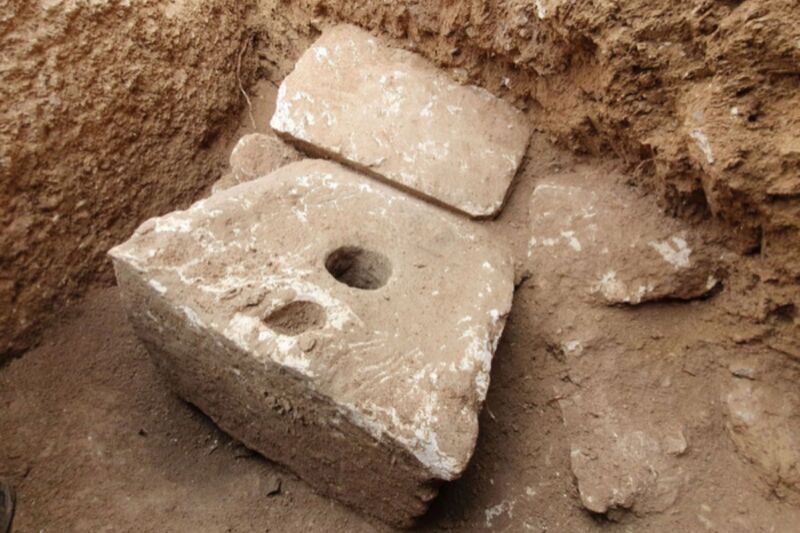
Old stone toilet reveals Jerusalem’s wealthy elite had intestinal parasites

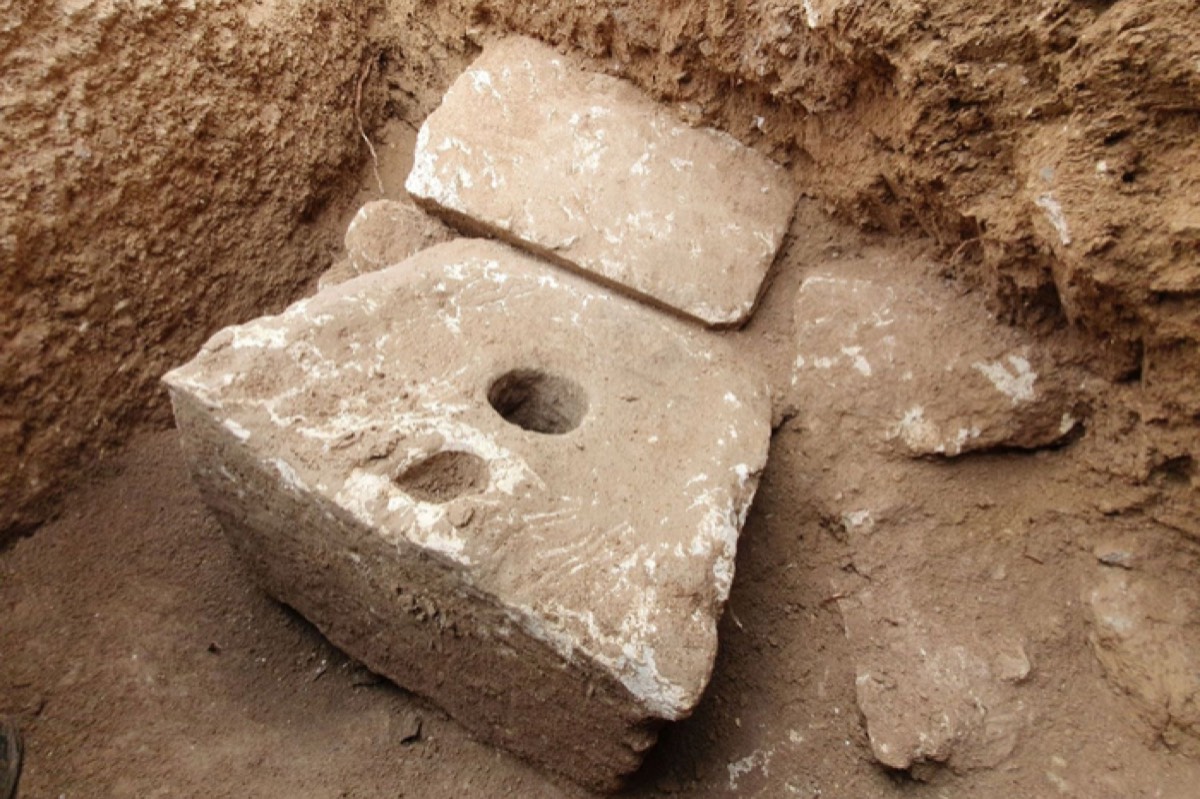
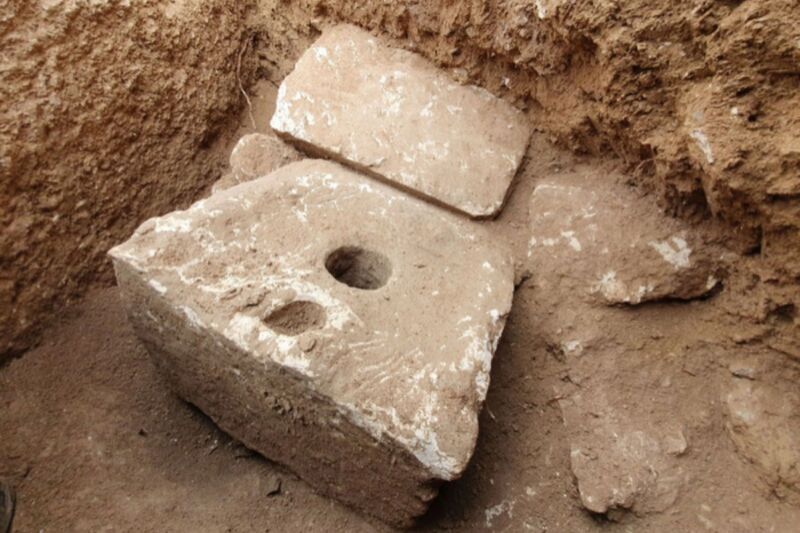
A 2,700-year-old toilet seat made of stone revealed the poor sanitary conditions of a 7th-century Jerusalem luxury villa.

Enlarge / A 2,700-year-old toilet seat made of stone revealed the poor sanitary conditions of a 7th-century Jerusalem luxury villa. (credit: Yoli Schwartz, The Israel Antiquities Authority)

The wealthy, privileged elite of Jerusalem in the 7th century BCE were plagued by poor sanitary conditions and resulting parasitic intestinal diseases, according to a recent paper published in the International Journal of Paleopathology. An analysis of soil samples collected from a stone toilet found within the ruins of a swanky villa revealed the presence of parasitic eggs from four different species. The work should help document the history of infectious disease in the region, providing additional insight into the daily lives of the people who once lived there.

“The findings of this study are among the earliest observed in Israel to date,” said author Dafna Langgut of Tel Aviv University and the Steinhardt Museum of Natural History, who is a leading researcher in the emerging field of archeoparasitology. “These are durable eggs, and under the special conditions provided by the cesspit, they survived for nearly 2,700 years. Intestinal worms are parasites that cause symptoms like abdominal pain, nausea, diarrhea, and itching. Some of them are especially dangerous for children and can lead to malnutrition, developmental delays, nervous system damage, and, in extreme cases, even death.”

Yes, it sounds gross, but archaeologists can actually learn a great deal by studying the remains of intestinal parasites in ancient feces. For instance, per Langgut, prior studies have compared fecal parasites found in hunter-gatherer and farming communities, thereby revealing dramatic dietary changes, as well as shifts in settlement patterns and social organization coinciding with the rise of agriculture. The domestication of animals in particular led to more parasitic infections in farming communities, while hunter-gatherer groups were exposed to fewer parasites and transmissible diseases given their nomadic lifestyle. This is even reflected in modern nomadic communities of hunter-gatherers.

Read 9 remaining paragraphs | Comments

Russia says it has neutralized the cutthroat REvil ransomware gang

Skull and crossbones in binary code

Enlarge (credit: Getty Images)

Russian law enforcement authorities said on Friday that they have arrested 14 people associated with REvil, a top ransomware group that has disrupted critical operations of wealthy targets and held their data hostage.

The action, carried out by Russia’s FSB, the successor agency to the KGB, is a rare example of the country’s government cracking down on cybercrime by its citizens. The US and Russia have no extradition treaty in place, and critics have said the Kremlin routinely harbors cybercriminals as long as they don’t target organizations located in the former Soviet Union. The arrests come as tensions between Russia and the US escalate over a standoff involving Ukraine.

Big-game hunter neutralized

“The FSB of Russia established the full composition of the criminal community ‘REvil’ and the involvement of its members in the illegal circulation of means of payment and documented illegal activities,” Russian officials wrote. “In order to implement the criminal plan, these persons developed malicious software and organized the theft of funds from the bank accounts of foreign citizens and their cashing, including by purchasing expensive goods on the Internet.”

Read 5 remaining paragraphs | Comments

EFF praises Android’s new 2G kill switch, wants Apple to follow suit

Stock photo of skull and crossbones on a smartphone screen.

Enlarge / This phone is receiving a 2G signal. (credit: Getty Images)

The Electronic Frontier Foundation is celebrating Google’s addition of a 2G kill switch to Android 12. The digital rights group has been campaigning against the dated, insecure 2G cellular standard since 2020, and Android is the first mobile OS to take the group’s advice and let users completely disable 2G.

In the US, carriers shut down 2G years ago, and the 3G shutdown is already underway. Phones have not really gotten the message, though, and modems still try to connect to any nearby 2G signals automatically. The problem is that 2G is very old, and it’s a lot like connecting to a WEP-secured Wi-Fi hotspot—the security is obsolete, so it’s easy to crack. If you’re in a country where legitimate uses of 2G are long dead, the standard only serves as an attack vector via fake cell phone towers, so why not just shut it off?

The EFF explains the issues:

Read 8 remaining paragraphs | Comments

Microsoft Teams turns your phone into a walkie-talkie

Microsoft Teams turns your phone into a walkie-talkie

Enlarge (credit: Getty)

One of the hallmarks of Boost Mobile prepaid phones in the early 2000s was their push-to-talk (PTT), or walkie-talkie, feature, which allowed you to play your voice through another Boost Mobile user’s phone speaker with the push of a button. Microsoft is now bringing a similar feature to iOS and Android devices via its Teams app. However, Microsoft isn’t using rappers and athletes to try to make PTT seem “cool,” as Boost Mobile did. Instead, the company is positioning the feature as a way to use technology to aid frontline workers.

In a blog post on Wednesday, Emma Williams, corporate VP of modern work transformation at Microsoft, announced that the walkie-talkie ability in Teams is now available “on all iOS mobile devices, such as iPhones and iPads, in addition to Android mobile devices.”

Williams also said the feature will come to some Zebra Technologies devices, such as rugged phones or scanning devices. Such products may even have a button you can press to connect instantly, just like real walkie-talkies and Boost Mobile’s old PTT phones.

Read 4 remaining paragraphs | Comments

PUBG maker sues mobile clone, Apple, Google for copyright infringement

Screenshot comparisons like these do make <em>Free Fire</em> look very similar to <em>PUBG</em>.

Enlarge / Screenshot comparisons like these do make Free Fire look very similar to PUBG.

Shortly after the 2017 release of PlayerUnknown’s Battlegrounds (PUBG), creator Brendan Greene publicly aired his exasperation at just how many developers were releasing shameless clones of the game’s then-unique battle royale concept and how hard it was to stop those copycats. Now, PUBG‘s Korean publisher Krafton has filed a lawsuit against one PUBG clone it says has engaged in “rampant, willful copyright infringement” of the popular game.

In the lawsuit, Krafton alleges that mobile hits Free Fire and Free Fire Max “extensively copy numerous aspects of Battlegrounds, both individually and in combination.” Those games attracted over 100 million daily users at the end of 2020, according to the lawsuit, and brought in the majority of Singaporean publisher Garena’s more than $2 billion in revenue for that year.

Krafton also makes Apple and Google party to the suit for listing the infringing game in their mobile app stores and for ignoring a recent request to take them down. In addition, Google is allegedly liable for hosting YouTube videos showing Free Fire‘s infringing gameplay on its service.

Read 10 remaining paragraphs | Comments

PayPal stole users’ money after freezing, seizing funds, lawsuit alleges

PayPal stole users’ money after freezing, seizing funds, lawsuit alleges

Enlarge (credit: Thomas Trutschel/Photothek)

PayPal is facing a class-action lawsuit alleging that the digital payments company violated racketeering laws by freezing customer funds without offering an explanation.

When users contacted PayPal about the frozen funds, they were told they had violated the company’s “acceptable use policy” but weren’t told how that violation had occurred, the lawsuit says. What’s more, it alleges that in at least one instance, PayPal said that a user would “have to get a subpoena” to find out why.

“PayPal violates its own Agreement by failing to provide adequate notice to users whose accounts have had holds placed on them,” the lawsuit says. When PayPal does let users know it placed a hold on their funds, “it does not inform such users why such funds are being held, how they can obtain a release of the hold, and/or how they can avoid future holds being placed on their accounts.”

Read 10 remaining paragraphs | Comments

Find the soul