


Hackers hammer SpringShell vulnerability in attempt to install cryptominers

Hackers hammer SpringShell vulnerability in attempt to install cryptominers

Enlarge (credit: Getty Images)

Malicious hackers have been hammering servers with attacks that exploit the recently discovered SpringShell vulnerability in an attempt to install cryptomining malware, researchers said.

SpringShell came to light late last month when a researcher demonstrated how it could be used to remotely execute malicious code on servers that run the Spring model-view-controller or WebFlux applications on top of Java Development Kit versions 9 or higher. Spring is the most widely used Java framework for developing enterprise-level applications in Java. The framework is part of a sprawling ecosystem that provides tools for things like cloud, data, and security apps.

Earlier this month, security firm Trend Micro said it began detecting attempts. From April 1 to April 12, company researchers detected an average of roughly 700 attempts per day to exploit the vulnerability to install cryptomining software. By running the malware on powerful enterprise servers, criminals can mine Bitcoin or other types of digital cash using the resources and electricity of an unwitting victim.

Read 8 remaining paragraphs | Comments

Army of worm larvae hatch from man’s bum, visibly slither under his skin

A <em>Strongyloides filariform</em> larva.

Enlarge / A Strongyloides filariform larva. (credit: Getty | BSIP)

Doctors in Spain diagnosed a man with an unusual roundworm infection after watching an army of larvae writhe and slither under his skin, blanketing his whole body in an ever-shifting rash.

Doctors reported the man’s rare hyperinfection this week in the New England Journal of Medicine, highlighting the unusual sight of a wriggling, sliding skin rash that tracked the movements of individual parasitic prowlers. The official diagnosis was larva currens from Strongyloides.

The unfortunate patient appeared to have a perfect storm of risk factors to develop the uncommon and unpleasant infection. The 64-year-old worked in sewage management and had previously been diagnosed with metastatic lung cancer. For three years prior, doctors had noted bouts where he had eosinophilia—unusually high levels of disease-fighting white blood cells—which can be an indicator of a parasitic infection.

Read 4 remaining paragraphs | Comments

Insteon finally comes clean about its sudden smart home shutdown

The lighting puns write themselves.

Enlarge / The lighting puns write themselves. (credit: Insteon)

Smart home company Insteon and its parent company, Smartlabs Inc., suddenly disappeared last week. In what will probably be remembered as one of the most notorious smart home shutdowns ever, Insteon decided to turn off its cloud servers without giving customers any warning at all, surprise-bricking many smart home devices that relied on the Insteon cloud.

Insteon CEO Rob Lilleness didn’t respond to any media questions about why his company suddenly abandoned its customers, choosing instead to scrub his LinkedIn page of information. First, the absentee CEO removed his role at Insteon from LinkedIn, and then he cut his name and picture. Finally, he deleted his entire LinkedIn account. (An archive of Insteon’s “Leadership” page, starring Rob Lilleness, has been preserved here for posterity.)

Insteon has finally updated its website (archive here) and pinned a goodbye message to the top of every page a full week after its surprise liquidation. The statement—which is not attributed to anyone—says that the company is going out of business because of the pandemic and supply chain problems. The company looked for a buyer but couldn’t find one.

Read 4 remaining paragraphs | Comments

Our first impressions after driving FedEx’s new electric delivery van

BrightDrop made efficient use of GM's new electric vehicle platform, bringing the Zevo 600 from idea to reality in less than two years.

Enlarge / BrightDrop made efficient use of GM’s new electric vehicle platform, bringing the Zevo 600 from idea to reality in less than two years.

As new electric vehicles go, the BrightDrop Zevo 600 is pretty spartan. It has a full suite of the latest driver safety aids and a Google-powered infotainment system, but you can see bare metal skin when you look at the door from the driver’s seat, and the innate quiet of its electric powertrain is offset by the ever-present clanking and banging from the rear roller door. But that’s OK because the Zevo 600 is a commercial van, and that means being reliable, efficient, and safe is more important than being the last word in refinement.

We’ve followed BrightDrop’s development for a while now. The startup first broke cover at the Consumer Electronics Show in 2021 through an announcement by General Motors’ Mary Barra during her keynote at the conference. Making use of GM’s new platform of batteries and electric motors, BrightDrop raced the new Hummer EV to be the fastest-developed vehicle in GM history at just 20 months.

As in the Hummer EV, you’ll find a double-stacked slab of lithium-ion cells between the Zevo 600’s wheelbase. In this case, there are 20 modules (versus 24 in the Hummer, or just 12 in the forthcoming Cadillac Lyric SUV), which is sufficient for a range of at least under 250 miles (402 km). And to prove it, the van drove from New York City to Washington, DC, on Thursday on a single charge.

Read 6 remaining paragraphs | Comments
Report: Sonos will finally make a soundbar that’s almost affordable

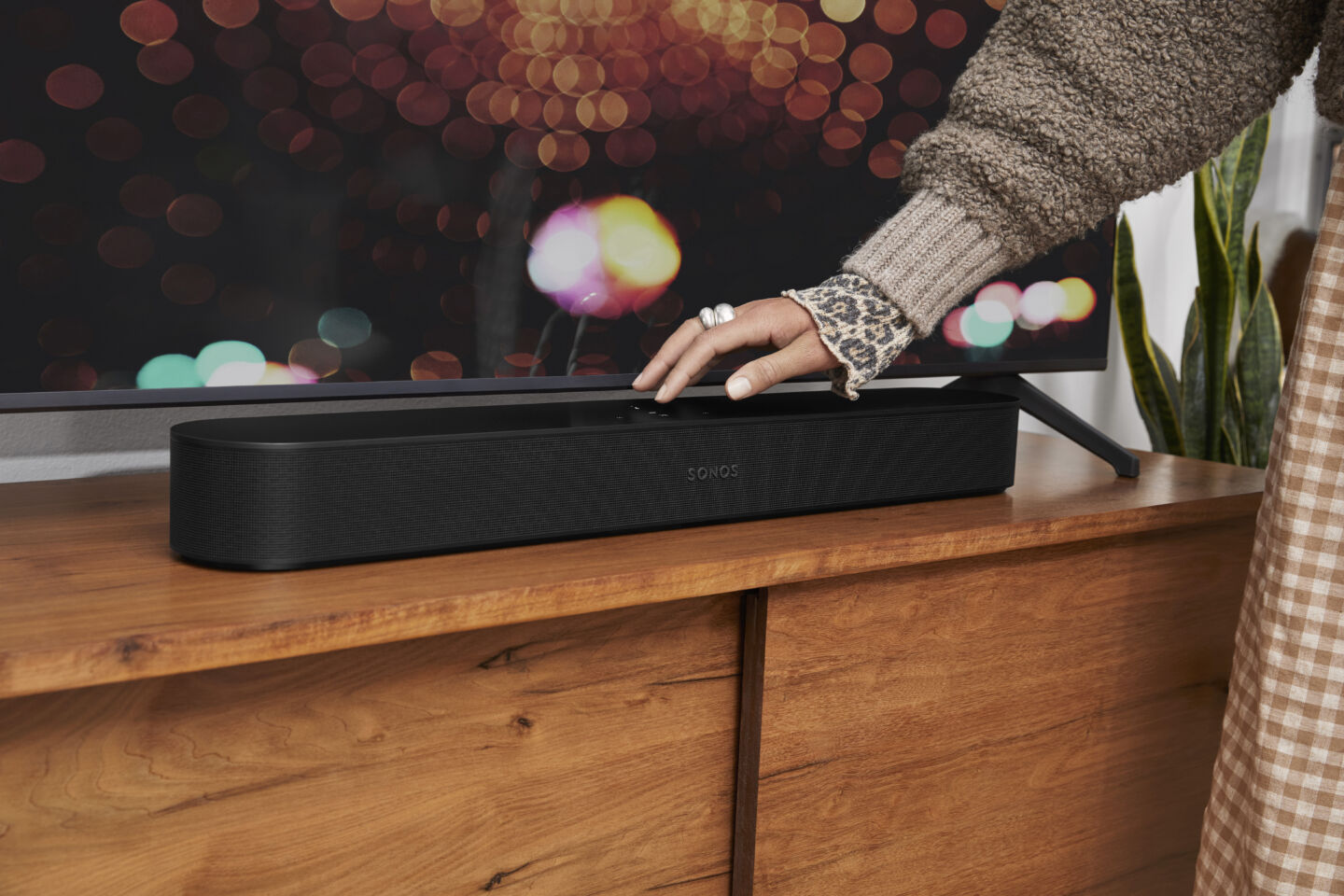
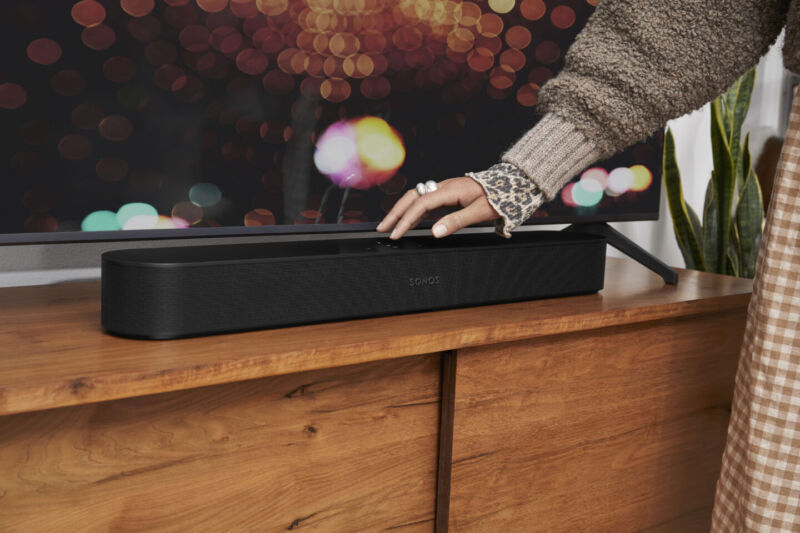
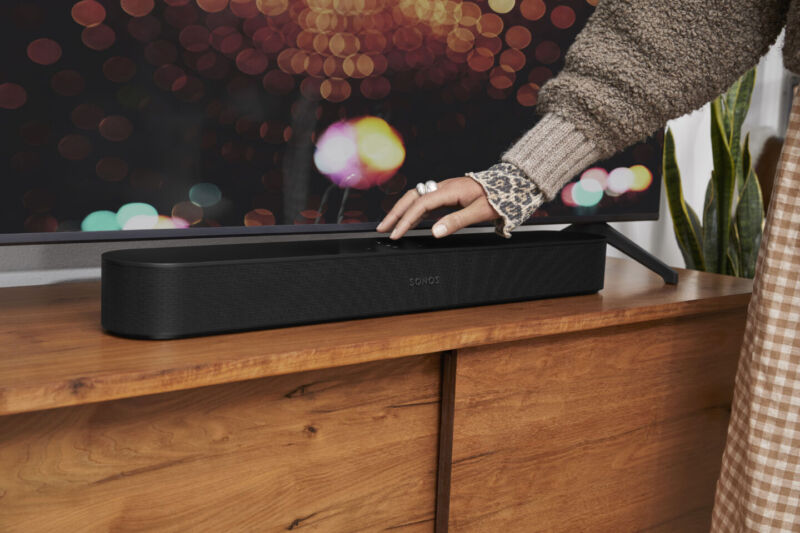
The second generation Sonos Beam, which was introduced last year. It's slightly larger than the rumored cheaper cousin to come.

Enlarge / The second generation Sonos Beam, which was introduced last year. It’s slightly larger than the rumored cheaper cousin to come. (credit: Sonos)

Sonos smart speakers are known for their ease of use and audio quality, not their affordability. That’s especially true for Sonos’ home theater products like soundbars, which only address the midrange and high-end markets.

That’s about to change, according to recent reporting by The Verge. The site claims to have seen photos of and gained access to information about a new soundbar codenamed the Sonos Fury, which has the model number S36. The new soundbar will retail for $249, according to the report.

There are still cheaper competing products from other brands, of course, but this would be Sonos’ least expensive soundbar—the Beam retails for $449, and the Arc sells for $899.

Read 4 remaining paragraphs | Comments
Biologist, elite climber team up to hunt for new species in The Last Tepui

Elite climber Alex Honnold teams up with NatGeo to bring biologist Bruce Means to the top of a massive “island in the sky” in The Last Tepui.

Deep in the Amazon jungle, magnificent rocky tabletop towers rise abruptly from the foliage, often cloaked in thick clouds. They’re called “tepuis” (“house of the gods”), and their plateaus, or mesas, are completely isolated from the forest below. That makes them a tantalizing potential source for exotic new species. National Geographic is marking Earth Day with the release of a new documentary, The Last Tepui, featuring renowned biologist Bruce Means teaming up with elite climber Alex Honnold and a veteran NatGeo team to become the first people to summit one of these remote structures.

(Some spoilers below.)

Anyone who has seen the Oscar-winning 2018 documentary Free Solo will be familiar with Honnold. He emerged seemingly out of nowhere in 2007 with a free solo climb of Astroman and the Rostrum in Yosemite National Park and soon became a dominant force in climbing. Free Solo documented Honnold’s quest to become the first to complete a free solo climb of El Capitan—not without controversy, given the very real risk of Honnold dying in the attempt. (Spoiler alert: He survived, completing the climb in 3 hours and 56 minutes.)

Read 24 remaining paragraphs | Comments

Airlines’ faulty altimeters spur FCC plan to regulate wireless receivers

Digitally generated image of glowing circles that form a data tunnel

Enlarge (credit: Getty Images | Andriy Onufriyenko)

The Federal Communications Commission unanimously voted to launch an inquiry into poorly designed wireless devices that receive transmissions from outside their allotted frequencies. The Notice of Inquiry (NOI) approved Thursday could result in new receiver regulations and is the first major step in the FCC’s quest to prevent future conflicts like the high-profile battle between the aviation and cellular industries, in which a 5G rollout was delayed because airplane altimeters receive transmissions from the wrong spectrum band.

The FCC said it will “explore options for promoting improvements in radio frequency (RF) receiver performance, including through use of incentives, industry-led voluntary approaches, commission policy and guidance, or regulatory requirements.” The inquiry will also “gather up-to-date information on receiver performance, advances in receiver technologies, and various approaches for promoting development and adoption of more interference-resilient receivers while fostering innovation in the marketplace.”

In her statement before the vote, FCC Chairwoman Jessica Rosenworcel said, “Receivers that are not sufficiently resilient [to interference] can make it more difficult to introduce additional services in the same or adjacent airwaves [and thus] diminish the spectral environment and shut out new uses before they even begin.”

Read 15 remaining paragraphs | Comments

Find the soul