

Today’s best deals: Roomba robot vacuums, Apple iPads, and more

Today’s best deals: Roomba robot vacuums, Apple iPads, and more

Enlarge (credit: Ars Technica)

It’s time for another Dealmaster! Our latest roundup of the best tech deals from around the web includes a number of deals on iRobot’s popular Roomba robot vacuums.

Several models are currently available for prices that either match or are close to the best prices we’ve tracked: The more basic “bump-and-run” Roomba 694 is about $50 off its usual street price at $180, for instance, while a step-up model like the Roomba i3 Evo, which cleans in more orderly patterns instead of semi-random ones, is down to a joint-low of $250. The Roomba j7, meanwhile, is about $160 off its usual price and adds better battery life and the ability to automatically avoid obstacles like pet waste or power cords. “Plus” versions of the latter two vacuums, which include a self-emptying feature that allows the devices to autonomously dump their debris into a compartment built into their charging docks, are also down to the best prices we’ve tracked.

The usual caveats with robot vacuums still apply—they’re not cheap, they’ll still get stuck from time to time, and they aren’t as strong as normal vacuums—but they can still be valuable to those who want to spend less time cleaning manually. The models we’ve highlighted below have generally received positive reviews around the web for their performance and durability, so they should represent a good value for those interested in giving this kind of device a try.

Read 2 remaining paragraphs | Comments

Netflix stock plummets 37% as CEO says company plans ad-supported tier

Netflix CEO Reed Hastings sitting on stage at a conference.

Enlarge / Netflix CEO Reed Hastings at the Milken Institute Global Conference in Beverly Hills, California, on October 18, 2021. (credit: Getty Images | Bloomberg)

Netflix plans to launch a lower-priced subscription tier with ads, CEO Reed Hastings said yesterday in an interview to discuss first-quarter earnings. Netflix revenue growth is slowing amid a loss in subscribers, and the company’s stock price was down about 37 percent today as of this writing.

Hastings said that an ad-supported tier is something “we’re trying to figure out over the next year or two” and that Netflix is “quite open to offering even lower prices with advertising as a consumer choice.”

“Those who follow Netflix know I’ve been against the complexity of advertising and a big fan of the simplicity of subscription,” Hastings said. “But as much as I’m a fan of that, I’m a bigger fan of consumer choice, and allowing consumers who would like to have a lower price and are advertising-tolerant get what they want makes a lot of sense.”

Read 15 remaining paragraphs | Comments

NASA is supporting some seriously risky missions to the Moon—it’s about time

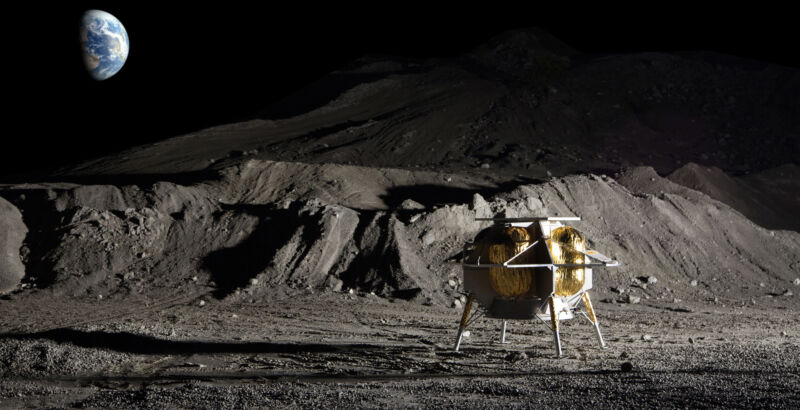
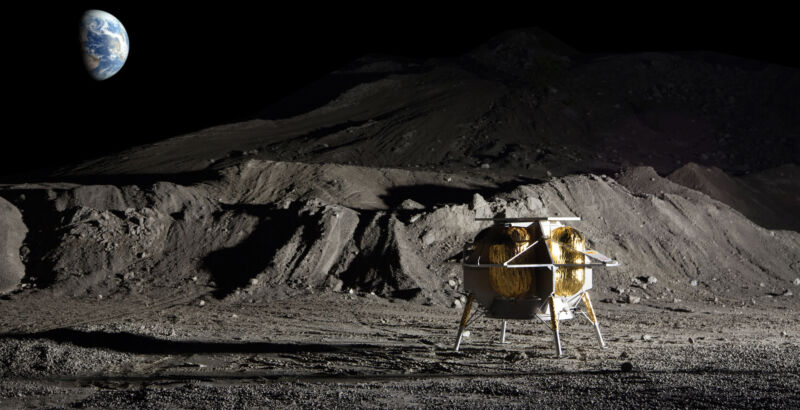
This illustration shows a concept for a commercial lunar lander from Astrobotic Technology.

Enlarge / This illustration shows a concept for a commercial lunar lander from Astrobotic Technology. (credit: NASA)

For more than three years, NASA has been intensely focused on the Artemis Moon program. This high-profile international effort, spearheaded by the US space agency at a cost of nearly $7.5 billion per year, seeks to return humans to the lunar surface in the mid-2020s and establish a sustainable presence in deep space.

But in recent years, NASA has been funding a second, much smaller-scale Moon program, at just 3 percent of the cost of Artemis. This is the “Commercial Lunar Payload Services” program, which seeks to use private companies to send small- and medium-size landers to the Moon’s surface for primarily science-based missions. Its budget is about $250 million per year.

This program, known as CLPS, is showing some promising signs and will beat the Artemis program to the Moon by at least a couple of years. Moreover, it represents a bold new effort by NASA’s Science division, which is seeking to leverage the emerging commercial space sector to radically increase scientific and exploration capabilities. If successful, the CLPS model of exploration could be extended to Mars and beyond.

Read 23 remaining paragraphs | Comments

dns_probe_finished_nxdomain Error [Solved]

If you are a regular Google Chrome user, then you might have encountered the error “dns_probe_finished_nxdomain” before. It is usually accompanied by “This site can’t be reached”. This error is associated with the Domain Name System (DNS) server and can occur due to misconfiguration in the DNS server, an unresponsive

Meet the micronova: Astronomers discovered new type of stellar explosion

Artist’s animation of a micronova, a new type of stellar explosion. Credit: European Southern Observatory.

Astronomers have discovered highly localized thermonuclear blasts coming from the surface of three white dwarf stars—unusually short-lived events they have dubbed “micronovae.” They’re similar to novas, except these blasts can burn through a tremendous amount of material in just a few hours, roughly equivalent to 3.5 billion Great Pyramids of Giza. According to the authors of a new paper published in the journal Nature, micronovae could be common in the Universe; they’re just difficult to detect because they don’t last very long.

“The phenomenon challenges our understanding of how thermonuclear explosions in stars occur,’ said co-author Simone Scaringi, an astronomer at Durham University in the UK. “We thought we knew this, but this discovery proposes a totally new way to achieve them. It just goes to show how dynamic the Universe is.”

Astronomers have known about novas for centuries. The 16th-century astronomer Tycho Brahe coined the term after witnessing a supernova in 1572, describing it in his treatise De nova stella (“concerning the new star”). The terms were used interchangeably until the 1930s when scientists began distinguishing between the events, since their causes and energies seemed quite different. Novas typically are the result, not of new stars, as the name implies, but the remnants of ancient stars known as white dwarfs.

Read 9 remaining paragraphs | Comments

Fate of travel mask mandate in limbo as CDC decides whether to appeal

Fate of travel mask mandate in limbo as CDC decides whether to appeal

Enlarge (credit: Getty | Spencer Platt)

The Department of Justice late Tuesday announced that it disagrees with a Florida judge’s ruling that abruptly nixed the federal travel mask mandate. However, the department said it would not immediately seek an appeal or a stay that would keep the mandate in place while litigation continued.

Instead, the DOJ said that it is now up to the Centers for Disease Control and Prevention to determine if the mask mandate “remains necessary for the public’s health.” If the CDC determines that it is necessary, the DOJ will appeal the decision.

The CDC is reportedly undecided on the matter. On April 13, just before the mask mandate was set to expire, the CDC extended it for 15 days so it could assess the state of the pandemic and decide if the mandate was still necessary. The agency noted the recent—and continuing—uptick in cases driven by the BA.2 omicron subvariant. “The CDC Mask Order remains in effect while CDC assesses the potential impact of the rise of cases on severe disease, including hospitalizations and deaths and healthcare system capacity,” the agency said at the time. “[The Transportation Security Administration] will extend the security directive and emergency amendment for 15 days, through May 3, 2022.”

Read 5 remaining paragraphs | Comments

Find the soul