Omron Healthcare has introduced its remote patient monitoring services in various regions around the world.Read More


Just another world around us !!
Omron Healthcare has introduced its remote patient monitoring services in various regions around the world.Read More
Enlarge /
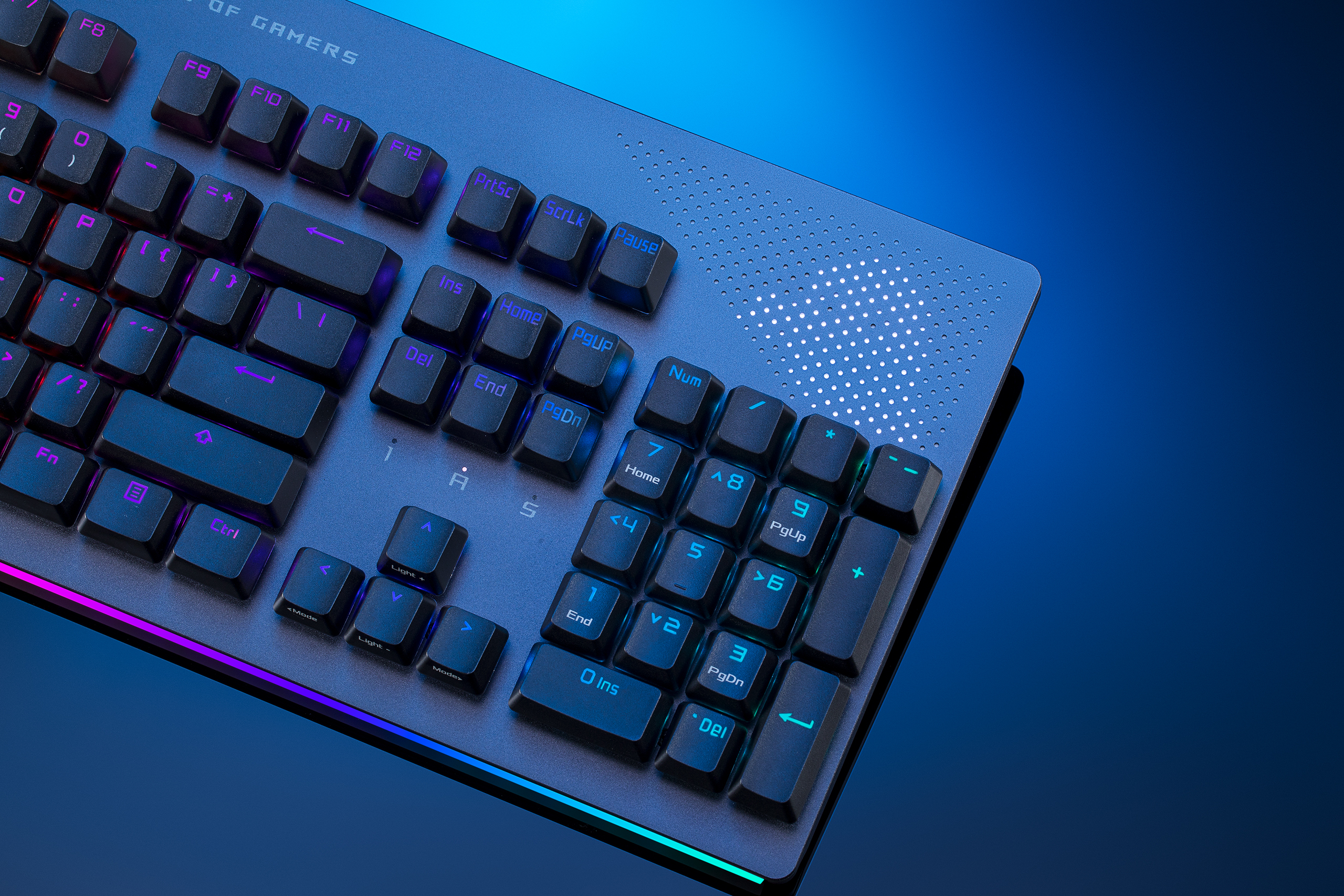
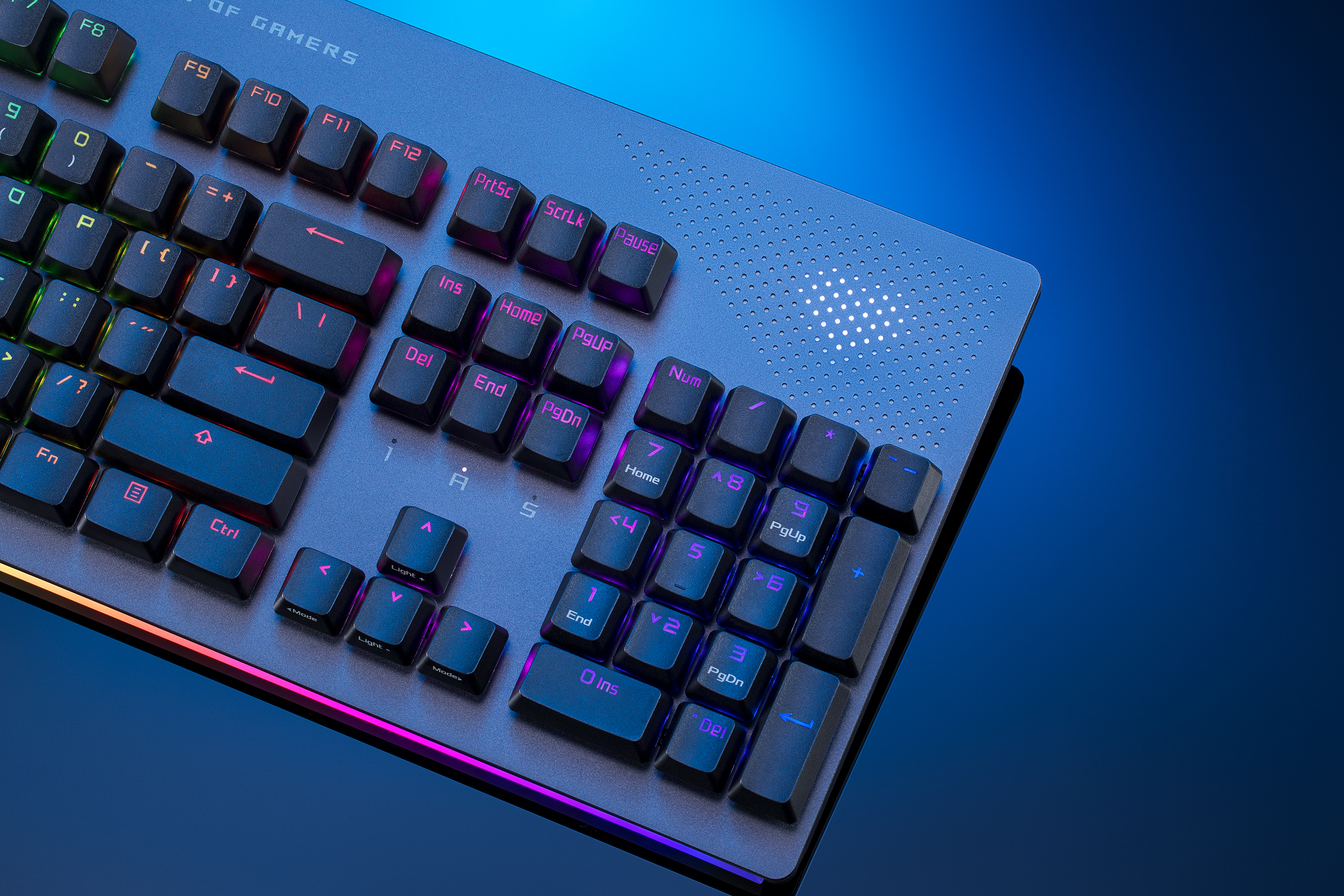
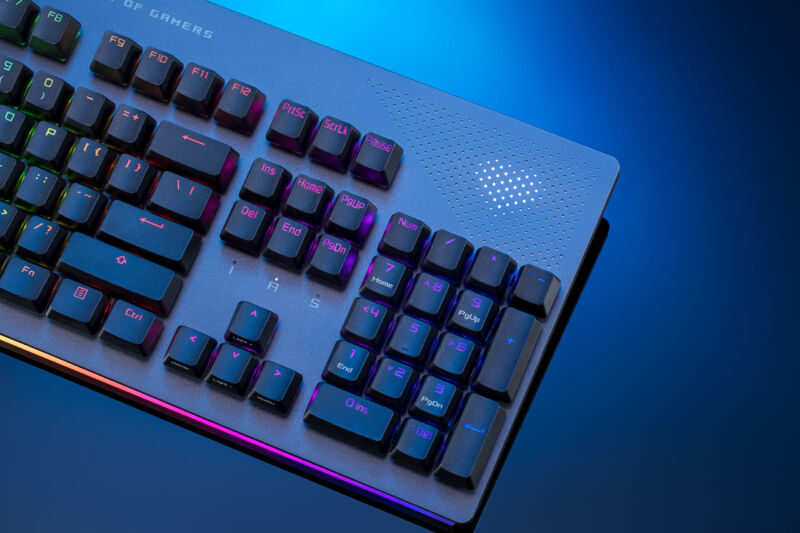
Asus announced an animated mechanical keyboard, the Asus ROG Strix Flare II Animate, at CES this week. It has many of the trendiest specs found in modern premium gaming keyboards, including an ultra-high polling rate. But it’s the programmable LEDs that really make it stand out—and no, I’m not talking about RGB keys.
The ROG Strix Flare II Animate is a full-sized keyboard with media keys. Most keyboards’ media keys are placed on the right side, above the numpad. The Asus keyboard’s programmable metal volume roller and hot keys are on the left side. The space above the numpad is instead reserved for the keyboard’s so-called “AniMe Matrix LED display.”
The AniMe Matrix is composed of 312 mini LEDs that you can program via software to display your own images or animations. You can also set the mini LEDs to react to sounds coming from your game or provide indicators for battery life, keyboard brightness, or the keyboard’s current RGB lighting mode.
Read 12 remaining paragraphs | Comments
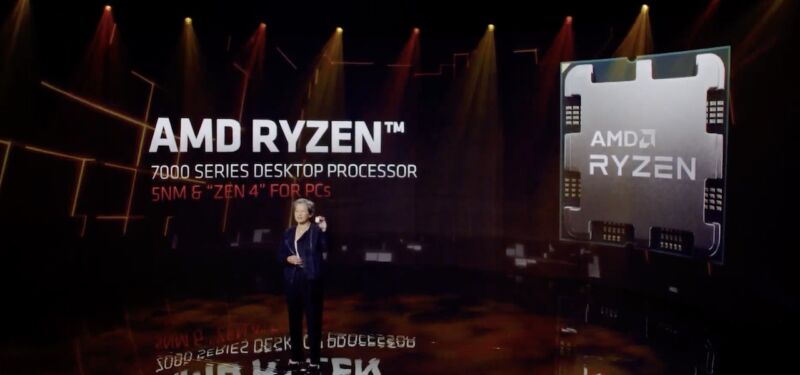
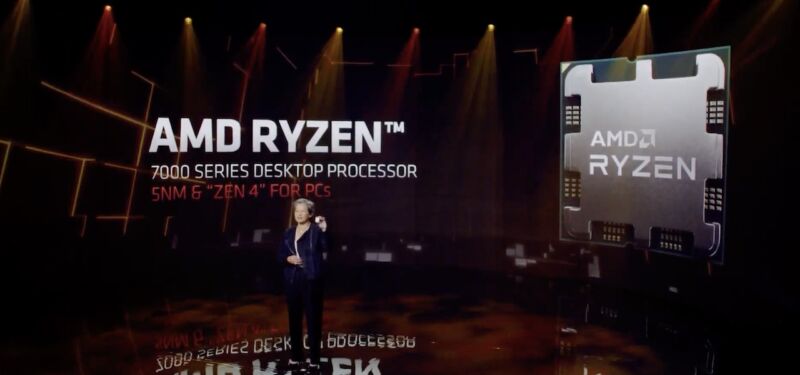
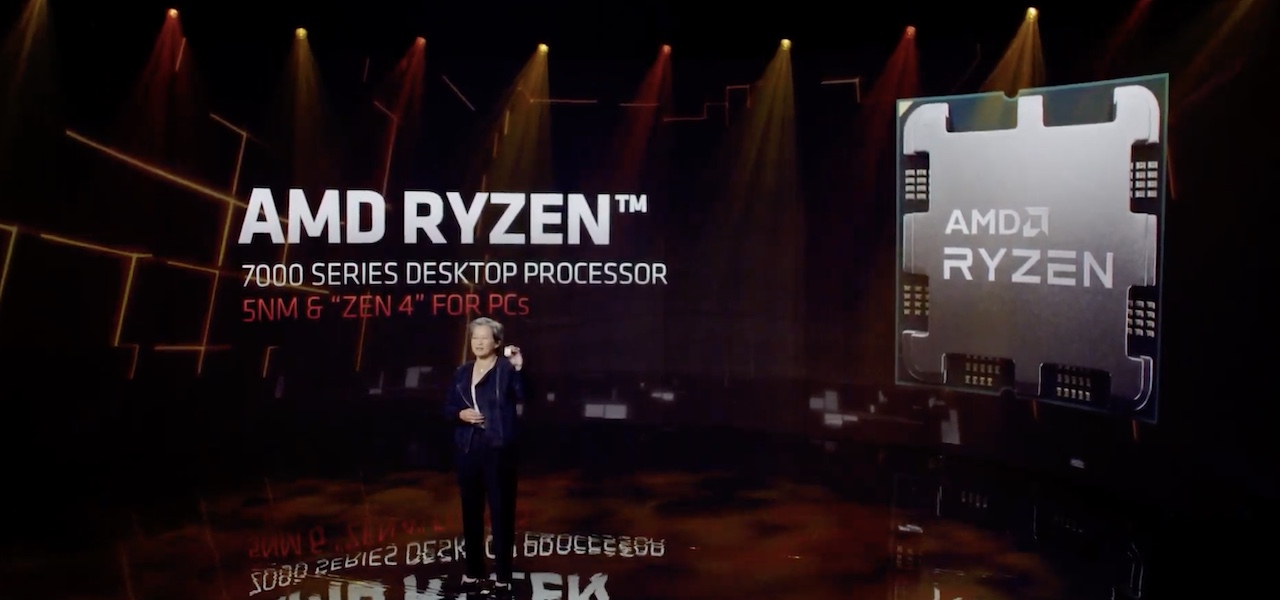
Enlarge / AMD’s Lisa Su holds up an early sample of a Zen 4 CPU. (credit: AMD)
AMD didn’t offer much news on its desktop processors at its CES press conference this morning, but it did offer a brief preview of its next-generation Ryzen 7000 processors and its Zen 4 architecture. These chips will be released in the second half of 2022 and will require an all-new motherboard with a new AM5 processor socket.
We know few details about the Ryzen 7000 CPUs, except that they’ll be built on a 5nm TSMC manufacturing process and that the sample AMD demonstrated onstage was running at 5 GHz (the current 5950X tops out at 4.9 GHz). We also didn’t hear anything about the AM5 socket that we didn’t already know—just that it will be a Land Grid Array (LGA) socket that puts the pins on the motherboard rather than on the bottom of the processor, the same as Intel’s desktop chips. We also know that CPU coolers made for AM4 motherboards should continue to work on AM5 boards.
AMD has been using the physical AM4 socket since 2016, but it still has a little life left in it—the new Ryzen 7 5800X3D CPU is an 8-core, 16-thread chip that uses the AM4 socket and improves speeds by stacking L3 cache on top of the processor die, something that AMD calls “3D V-Cache technology.” This both increases the cache’s bandwidth and the amount of cache; the standard 5800X includes just 32 MB of cache, compared to the 5800X3D’s 96 MB.
Read 3 remaining paragraphs | Comments
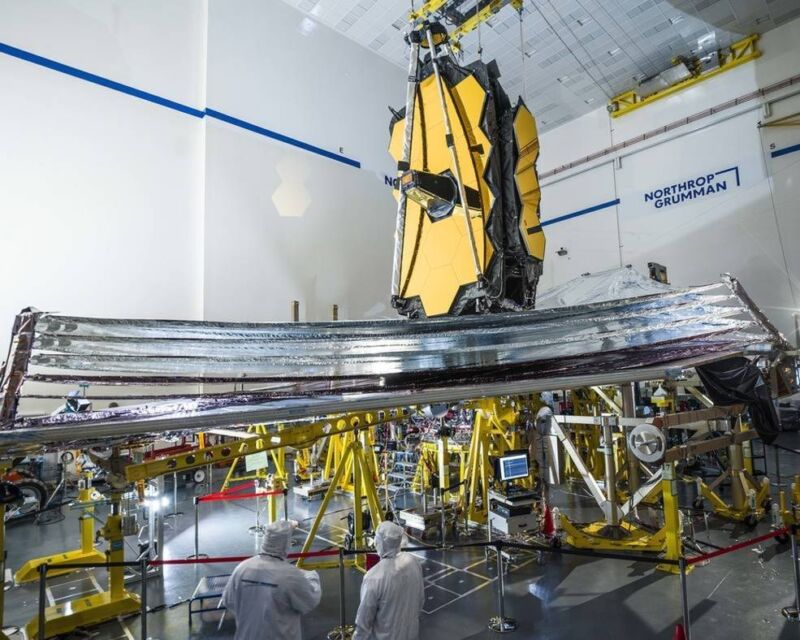
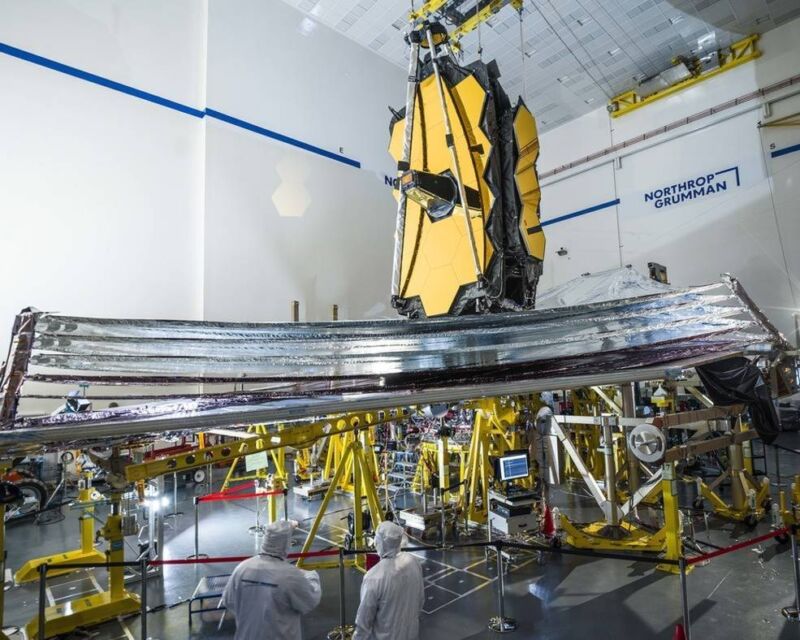
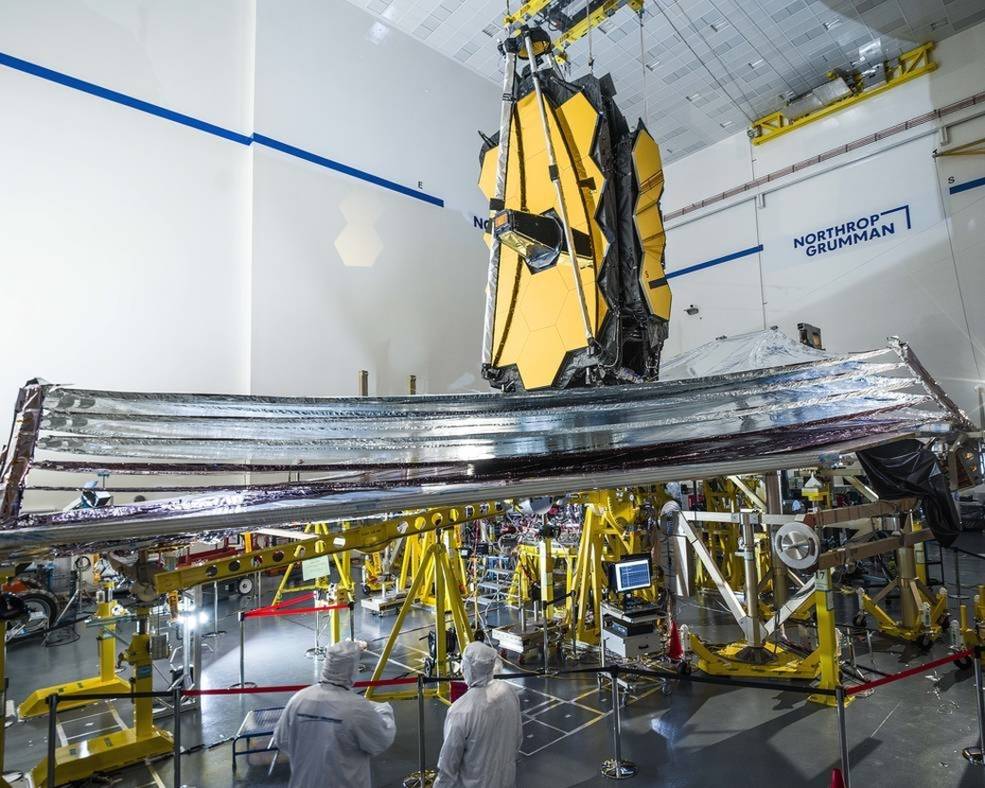
Enlarge / On Jan. 4, 2022, engineers successfully completed the deployment of the James Webb Space Telescope’s sunshield, seen here during its final deployment test on Earth in December 2020 at Northrop Grumman in Redondo Beach, California. (credit: NASA)
NASA has not finished deploying the James Webb Space Telescope yet, but the scientists and engineers working on the $10 billion instrument are feeling a lot better today.
As of late Tuesday morning, NASA and the telescope’s primary contractor, Northrop Grumman, successfully stretched all five layers of the telescope’s sunshield. This step completed the critical process of deploying the telescope’s massive and essential sunshield, which keeps the telescope cold so that it can make delicate observations of faint objects.
“The mood is hard to describe,” said Hilary Stock, a structural engineer at Northrop Grumman who worked on the sunshield “tensioning” Monday and Tuesday, during a teleconference with reporters. “It was a wonderful moment. A lot of joy. A lot of relief.”
Read 7 remaining paragraphs | Comments
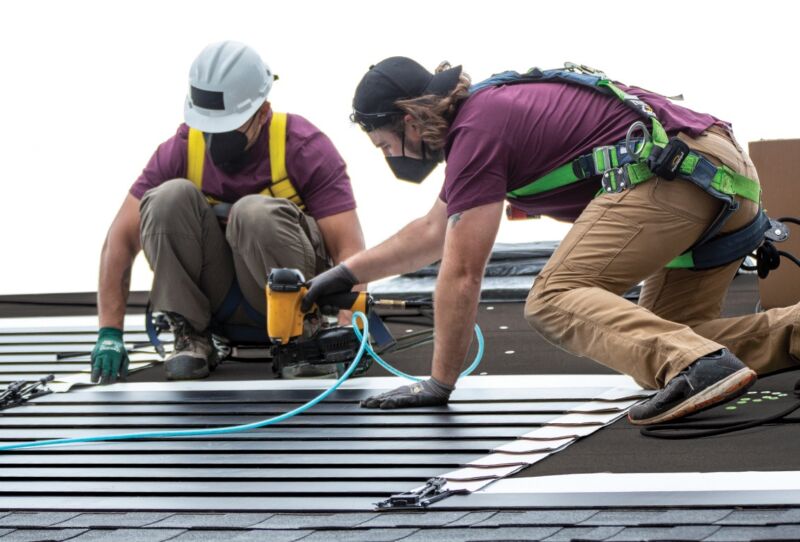
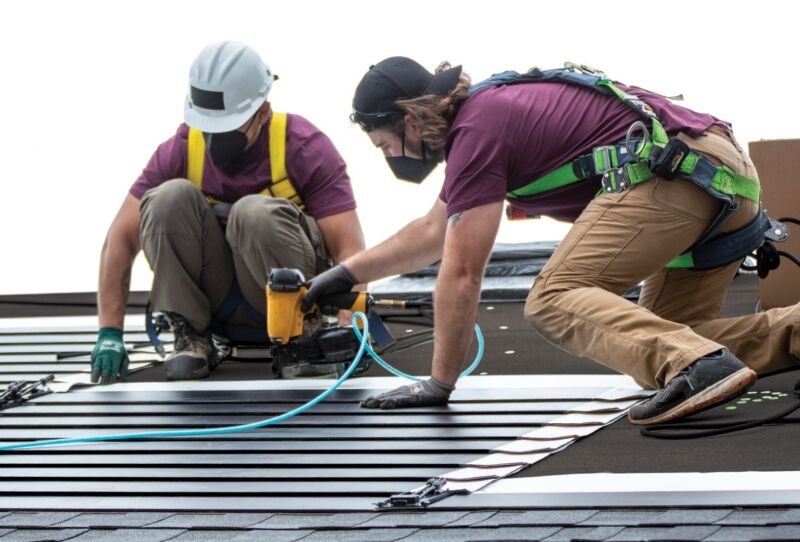
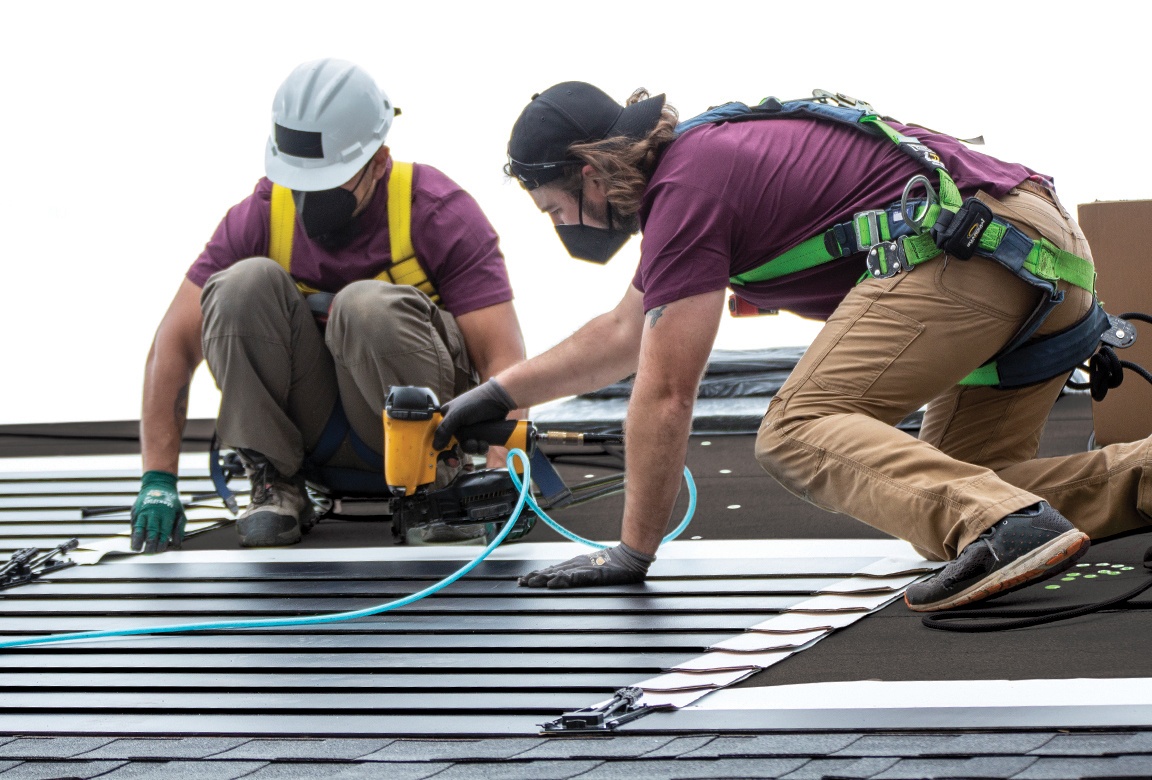
Enlarge / Installers nail GAF Energy’s new solar shingles to a demonstration house. (credit: GAF Energy)
A new solar technology introduced yesterday at CES could bring power-producing roofs mainstream by relying on an old building material—nails.
For years, homeowners who wanted solar power have stripped their old roofs of shingles, added new ones, and then slapped large solar panels on top using sturdy frames. It’s a model that works well, but it also creates a two-step process that engineers have been striving to simplify.
Plenty of companies have offered their own take on solar roofs, but so far, they’ve remained niche products. GAF Energy is hoping to change that with the Timberline Solar Energy Shingle that looks strikingly like typical asphalt shingles. But their key feature isn’t so much that they emulate the look of asphalt shingles, but that they’re installed in nearly the same way. Roofers can slap the flexible sheets down and nail the top strip to the roof, just like they do for traditional roofs.
Read 13 remaining paragraphs | Comments

Mojo Vision has raised $45 million to adapt its augmented reality contact lenses to work with sports and fitness applications.Read More
Panasonic has teamed up with the Area15 entertainment company in Las Vegas to create immersive entertainment based on Panasonic’s projectors.Read More

Xfinity has announced a new esports competition for gamers in major northeast cities. Mission Control is helping to organize it.Read More

From all-in-one consumer PCs to cutting edge laptops, Acer announced its new lines and refreshes of products, mostly in their gaming line.Read More